






We are witnessing an unprecedented number of sports leaders running for parliamentary seats.
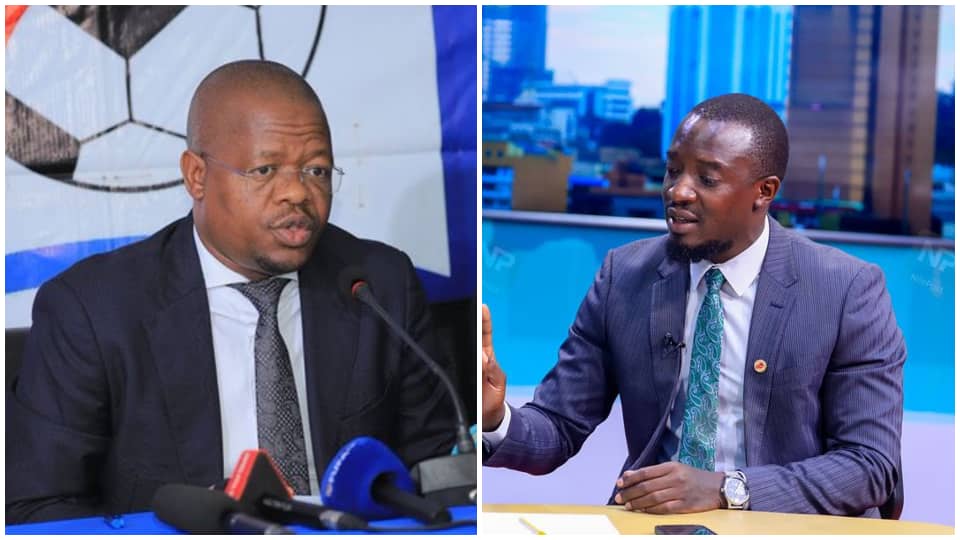
Prominent among them is the President of the Uganda Boxing Federation, Moses Muhangi, who is contesting to become Member of Parliament for Kampala Central.
Among other reasons, Muhangi believes that meaningful development funding for boxing can only be achieved if he personally sits in Parliament. This belief now has clear examples within Uganda’s sports sector.
On a talk show on NBS Sport, Muhangi cited the football budget, which rose to UGX 17 billion after the FUFA President, Hon. Moses Magogo, entered Parliament as MP for Budiope East.
Other MPs whose sports disciplines now receive substantial government funding include rugby at UGX 7 billion under Hon. Andrew Ojok, motor sport at UGX 3 billion under Hon. Jimmy Akena, and paralympic sports at UGX 1.2 billion under Hon. Bumali Mpindi, among others.
Currently, the annual government allocation to boxing stands at about UGX 260 million, or UGX 0.26 billion.
This partly explains Muhangi’s determination to enter Parliament and push this modest allocation into the billions, just like other sports that have MPs.
However, what we must also appreciate is the deeper significance of Muhangi’s parliamentary bid. One key issue is Uganda’s huge youth population with no jobs and no meaningful way to occupy their idle time. These youths pose a serious danger to the country.
Very few sectors of the Ugandan economy can absorb these young people because most are already saturated. Jobs are simply not available. Even fewer sectors can absorb them quickly and in large numbers.
Establishing a factory or a bank takes time and requires skilled manpower, which many youths do not have. Agriculture is largely unattractive to young people and remains underfunded in the national budget. Sports, however, can absorb youths in large numbers and within a short time.
A new table tennis or boxing club, for example, can be set up in just one week. All that is required is a venue and basic equipment, both of which are readily available if enabling funding is provided.
The habit of funding only a few sports with billions while the rest receive peanuts is therefore a serious mistake by government.
As surely as night follows day, dangerously idle youths will eventually become a major national problem. They are simply too many, and the few well funded sports federations cannot absorb them adequately.
Government is spending heavily on constructing competition stadia, yet it has forgotten to adequately fund the federations and the youths who are meant to play in those facilities. The real challenge today is human capital, not infrastructure.
When you look at what Muhangi has done through the Boxing Champions League, you begin to appreciate how quickly and effectively sports can reduce youth idleness by redirecting excess energy into productive activity.
The BCL has provided boxers, coaches, referees, and other officials with income twice every month. It occupies many youths both physically at the arena and through television exposure on NBS, time that might otherwise have been spent on harmful activities.
If boxing can achieve this with just UGX 0.26 billion, what would be possible with a government allocation of UGX 17 billion, similar to football. That would be nearly 65 times the current budget.
What if we had 65 BCLs operating across Uganda, as envisioned under the new Sports Act. These are the questions we must address if we are serious about solving the problem of youth idleness. With such funding, all 65 BCLs could realistically start within two to four months and engage massive numbers of young people. This is what is meant by the ability of sports to quickly mop up youth idleness.
Muhangi’s quest for a parliamentary seat exposes a deeper problem, namely the lack of adequate funding for national sports federations at the level of Parliament. A critical question arises. Must all leaders of the 52 national sports federations first enter Parliament for their sports to be funded properly. Similarly, must all Ugandans first become MPs in order to receive meaningful service delivery.
This is a dangerous trend that undermines the true purpose of Parliament, which is meant to consist of a few representatives serving all Ugandans fairly. When acceptable service delivery can only be achieved by personally sitting in Parliament, then what we have ceases to be a true Parliament.
All MPs, especially those with a sports background, must reverse this trend that is driving a dangerous scramble for parliamentary seats. They must establish fair funding criteria that allocates sufficient resources to all federations.
The key phrase here is fair funding, which is very different from equal funding. Only federations with adequate annual funding can grow meaningfully and engage the dangerously idle youth. The fact that these youths are currently following campaigning candidates from rally to rally all day is itself clear evidence of unemployment or underemployment.
The writer is a Bush Lawyer, former President of the Uganda Table Tennis Association, and Secretary General of the Union of Uganda Sports Federations and Associations.