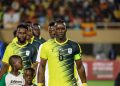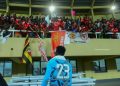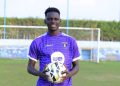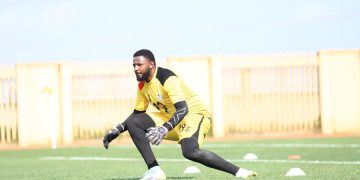








Salim Jamal Magoola did not play a single minute at AFCON 2019, yet few players in Uganda Cranes history have carried a louder presence over the past six years.
From Egypt in 2019 to the road towards AFCON 2025, Jamal’s name has never left the conversation, not because of minutes played, but because of what his career has come to represent within Ugandan football.
Jamal’s issues with the national team setup did not begin on the pitch. They began with money, promises, and accountability.
When FUFA failed to honour financial commitments to players, Jamal demanded what was owed. It was a direct, unapologetic stance, one that instantly made those in authority uncomfortable. In Uganda’s football ecosystem, speaking up has often come at a price, and Jamal was about to pay it.

Despite being the country’s most consistent goalkeeper at club level, Jamal slowly became an irregular name on national team lists. His absence raised questions, especially as performances continued to justify inclusion.
The breaking point came at AFCON 2019 in Egypt. Ahead of the Round of 16 clash with Senegal, the Uganda Cranes players went on strike over unpaid bonuses. The situation spilled into the public domain, drawing criticism from outside football circles, including legislator Odonga Otto.
Jamal responded publicly on social media, pushing back and clarifying the players’ position. FUFA treated the response as an indiscipline case.

In July 2019, Jamal was summoned before the FUFA Disciplinary Committee, a moment that quietly altered the trajectory of his international career.
What followed was a familiar cycle. Call-ups came sparingly, absences lasted longer. The explanation was never tactical. Jamal was considered vocal, outspoken, and difficult.
After AFCON 2019, his next return came in 2021. Two years later, he was back out again.
When he was recalled in 2023, tension surfaced immediately. Jamal and his senior, Dennis Onyango, took to X (formerly Twitter) in posts that hinted at unresolved grievances.
“Let the light of the Almighty Allah shine into our hearts, for He holds the future. JUMMAH Mubarak,” Jamal posted.
Onyango followed with a pointed question: “National team anthem clear?”
Jamal replied in Luganda: “Nkyalinze apology.”
The exchange was loaded. In a leaked WhatsApp audio, Onyango had previously suggested that Jamal’s outspoken nature on social media may have permanently damaged his standing with the decision-makers.

“Jamal was so vocal on X, I don’t know whether Magogo will ever call him to the national team again,” Onyango said – translated from Luganda.
That single statement quietly answered a long-standing question around Ugandan football: who truly controls national team selections?
Jamal honoured the 2023 call-up, but his return was unforgiving. A costly error in a FIFA World Cup qualifier handed Guinea a 2–1 victory. It was a moment that quickly became a reference point for critics, despite the reality that every goalkeeper, at some point, pays for a mistake.
Soon after, Jamal was frozen out again.
Yet public support for him never faded. Fans continued to point to his consistency at club level and his willingness to stand up for players’ rights. Over time, Jamal became more than just a goalkeeper, he became a symbol.
One quote came to define him: “When you speak, you’re indisciplined.”
For successive national team coaches, Milutin “Micho” Sredojević, Jonathan McKinstry, and later Paul Put, Jamal’s omission became a recurring topic at press conferences. The answers were often brief, cautious, and revealing.
“For Jamal, it’s beyond me.”

Eventually, the pressure became impossible to ignore. Ahead of the September FIFA World Cup qualifiers, Jamal was recalled, a decision that felt less like selection and more like acceptance. Coincidentally, it also marked the return of Dennis Onyango.
The contrast was striking.
At AFCON 2019, Jamal travelled as the third-choice goalkeeper. Ahead of AFCON 2025, he stands as Uganda Cranes’ first-choice.
But Ugandan football has a way of repeating itself.
Six years after the Egypt standoff, the Cranes once again faced disruption over unpaid bonuses. The team failed to train on Saturday, with senior players leading a sit-down protest, this time much earlier in the campaign, before even kicking a ball. Head coach Paul Put aligned himself with the players.
History had come full circle.
In Ugandan football, squad announcements and omissions often reveal deeper tensions than tactics ever could. Disagreements resurface, alliances are exposed, and old wounds reopen.
For Salim Jamal Magoola, the journey has never been just about football. It has been about the cost of speaking up, and the time it takes for the game to finally catch up with the truth.