







By Desmond Kigabane
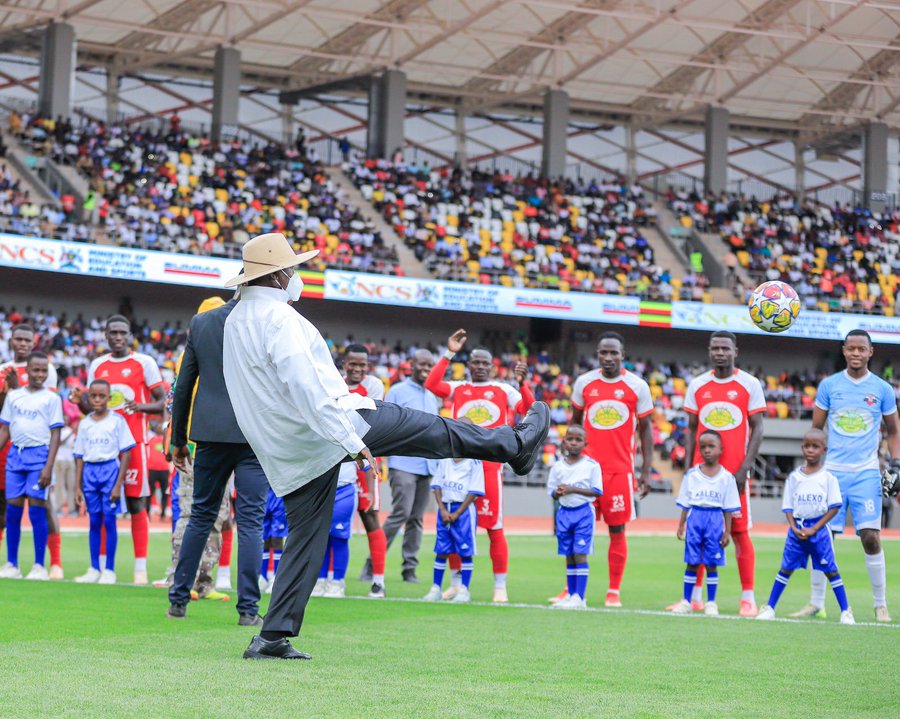
Today, 24th December 2025, Hoima City Stadium was officially inaugurated, marking a significant milestone in Uganda’s sporting infrastructure. While the country has witnessed the construction of several mini stadia over the years, the unveiling of Hoima City Stadium stands out as a rare and defining moment.
Since the inauguration of Mandela National Stadium, Namboole, in 1997, this is arguably the first time Uganda has opened another venue of comparable “first-class” stature—an achievement that has taken more than 27 years to materialize.
As a nation, celebrating such facilities is always justified. For decades, inadequate infrastructure has been one of the biggest obstacles to the growth of Ugandan sport. New stadia therefore symbolize progress, ambition, and renewed belief. Yet beyond the concrete, seats, and turf, the true life of a stadium is defined by the events it hosts and the memories created within its walls.
History has a way of attaching itself to sporting venues, and among its most treasured chapters is always the inaugural event. In football, the first match played in a new stadium carries a special weight. It is remembered not merely for the result, but for what it represents—the beginning of a journey.
In the days leading up to the Hoima City Stadium inauguration, it was announced that a friendly match between KCCA FC and Kitara FC would have the honour of christening the new arena. Anticipation steadily built, and on the day itself the moment finally arrived.
Before a respectable crowd, and in the presence of the President of Uganda, the two sides took to the pitch to write the stadium’s first footballing chapter.
The match was keenly contested, but it was Kitara FC who emerged victorious with a narrow 1–0 win over KCCA FC. The decisive moment came through Isaac Amutuhaire, whose solitary goal in the 25th minute proved to be the difference.
With that strike, Amutuhaire did more than win a match—he inscribed his name into history as the first-ever goal scorer at Hoima City Stadium.
That moment naturally invites reflection. For followers of Ugandan football, inaugural goals echo across generations. Hoima’s first scorer now enters an exclusive historical conversation—one that began nearly three decades earlier at Namboole.
When football finally took possession of Mandela National Stadium, Namboole, the occasion was entrusted to Uganda’s fiercest rivalry: Express FC versus SC Villa.
The fixture had initially been scheduled for January 1998 but had to wait. The iconic Lucky Dube concert of 1997, which attracted unprecedented crowds, left the newly completed venue in need of repairs. As a result, the landmark match was postponed to 7th February 1998.
On paper, the match carried little competitive weight. No trophies were at stake, and no league destinies hung in the balance. Yet its importance far outweighed the scoreline. This was the first official football match ever played at Namboole—a stadium that represented a long-awaited leap forward for Ugandan sport.
After years of coping with modest and often inadequate grounds, players were now stepping onto a pitch that embodied ambition, scale, and national pride.
The sense of occasion was unmistakable. Both Express and SC Villa played with heightened awareness, conscious that history was being written with every touch of the ball.
The derby unfolded cautiously, tightly contested and emotionally charged, with clear chances hard to come by.
One moment, however, proved decisive. Fred Tamale, displaying the calm and precision that defined his career, found the breakthrough for Express FC. His goal secured a narrow 1–0 victory and etched his name permanently into Ugandan football folklore as the first scorer at Mandela National Stadium.
In that single strike, Namboole’s football story was born—rooted in rivalry, delayed anticipation, and a goal that transformed a new stadium into a living chapter of history, paving the way for generations of unforgettable moments.
The parallels between Namboole and Hoima City Stadium are striking. Though separated by decades, both venues were unveiled amid national optimism and expectation. In both cases, the first football match carried symbolic significance far beyond the scoreline. And in both instances, a single goal was enough to define history.
Isaac Amutuhaire at Hoima City Stadium and Fred Tamale at Namboole are now linked by more than coincidence. Each struck a solitary goal; each goal opened a new chapter; and each scorer earned a permanent place in Uganda’s football narrative. Their names will forever resurface whenever conversations turn to the origins of these great venues.
As Hoima City Stadium embarks on its own journey—much like Namboole did in 1997—it carries the promise of future memories, triumphs, heartbreaks, and heroes. And just as Namboole’s story began with Tamale, Hoima’s has begun with Amutuhaire. In football, moments fade and seasons pass, but inaugural goals endure—etched permanently into the foundations of history.