






One of the biggest debates in the sports sector today is about what sports should actually do for our country. Put simply, what tangible benefits should sports deliver to Uganda?
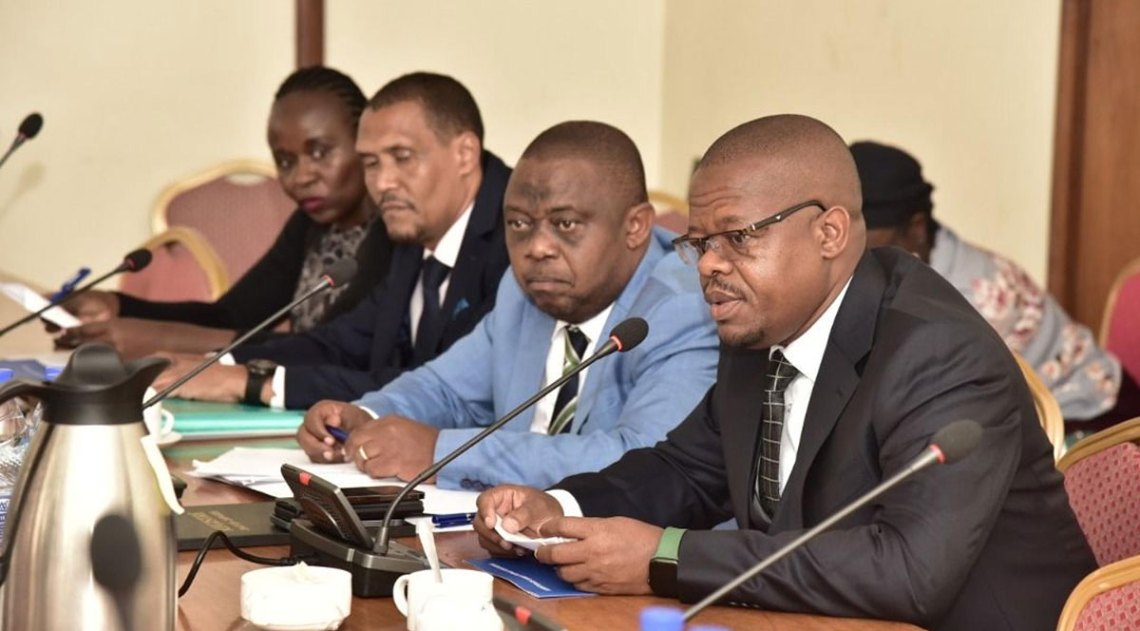
This issue recently surfaced again during the clash in Parliament involving Hon. Moses Magogo, President of the Federation of Uganda Football Associations, and the National Council of Sports.
Speaking on NBS Sport, Magogo made it clear that he disagrees with the argument that winning medals is, on its own, sufficient justification for increasing the sports sector budget.
Magogo believes that economic empowerment offers a stronger and more convincing case to Parliament. In his view, many federation leaders and even NCS do not frame their arguments in economic terms when defending the sports budget before those who allocate funding. I agree with him.
Spending billions simply to win a medal or trophy abroad does not make financial sense. At times, it feels like exchanging hard earned money for metals that carry little direct economic value.
That may sound harsh, but such honesty is necessary. Consider this example. If your child asked for 10 million shillings to travel abroad for a competition and return with a medal, you would hesitate, especially if the money was scarce or the expense would cause hardship at home.
Now imagine the same child had a strong chance of winning not only a medal but also 50 million shillings in prize money. The decision becomes easier. Spending or even borrowing 10 million to potentially gain 50 million is a reasonable and attractive risk. The economic return justifies the investment.
One major challenge in our sector is that many sports leaders do not think in economic terms. They see international medals as prestigious enough to guarantee government support.
Yet we are not commercialising those medals effectively. I once suggested that federations that win medals should quickly establish national training arenas. These facilities could attract foreign athletes who would pay to train alongside our medalists, generating foreign income for the country.
This is exactly what some countries do. After winning major international medals, they launch campaigns to attract foreign athletes to train within their borders. During my time as President of the Uganda Table Tennis Association, I received over six proposals from France to place promising Ugandan players in French academies for ten months, at costs ranging from 15,000 to 25,000 euros. France understands that many athletes around the world aspire to play like their top performers. As a result, they have built training academies that generate foreign income by attracting international players.
Uganda must learn from such models. International medals should be leveraged to generate financial returns. This is the language Cabinet and Parliament understand. Few policymakers will refuse to invest in ventures that promise measurable returns. On this issue, I fully agree with Magogo. Government should be viewed as an investor in sports, expecting a return on its investment.
Taxpayers’ money should also be treated as capital that demands accountability and results. If we continue to treat public funding as consumption rather than investment, we should not be surprised when budget allocations remain stagnant.
A practical example reinforces this point. When Magogo and his FUFA team secured the PAMOJA bid to host the Africa Cup of Nations, they persuaded government to commit over one trillion shillings to sports infrastructure, the largest such investment in the history of the NRM government. Even before that, FUFA had convinced government to allocate up to 17 billion shillings annually in budget support. NCS should study these figures carefully and ask why FUFA has been able to secure funding levels that NCS itself has struggled to obtain.
FUFA went directly to government and successfully lobbied for its interests. Meanwhile, federations that rely solely on NCS to advocate for increased funding continue to voice frustration over limited allocations year after year. NCS must reflect on why FUFA has succeeded where it has not. We must also ask whether Magogo’s approach deserves closer attention. It raises an important question: how does a parent body fail in lobbying where one of its affiliates succeeds?
The writer is a Bush Lawyer, former President of the Uganda Table Tennis Association, Secretary General of the Union of Uganda Sports Federations and Associations, and Board Member of the Uganda Olympic Committee.