






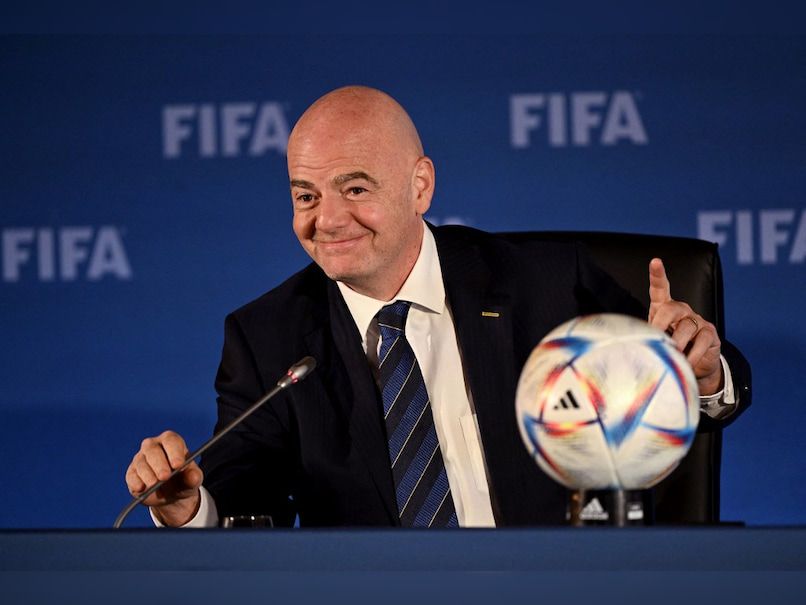
On February 26, 2016, Gianni Infantino was elected President of FIFA, ushering in a new era focused on governance reforms and global football development.
Ten years later, the transformation across Africa tells a powerful story of investment, infrastructure growth, and expanded opportunity.
One of the most significant milestones of Infantino’s presidency was the launch of the FIFA Forward Programme in 2016. Designed to provide structured financial support and expertise to all Member Associations, the initiative has reshaped football development worldwide.
By the end of 2026, $5 billion will have been made available globally for development purposes through the programme.
For Africa specifically, the numbers reflect unprecedented backing: Over $1.2 billion invested in football development, 203 infrastructure projects completed across the continent, 74 Technical Centres and Federation Headquarters built, renovated, or upgraded, 99 artificial turf pitches constructed, 59 stadiums and stand renovations completed, 51 competition-related development projects funded or launched.
These figures represent more than statistics, they reflect improved training environments, strengthened football governance structures, and expanded access to the game at grassroots and elite levels.
A landmark example came in June 2024 with the inauguration of the renovated Juba National Stadium in South Sudan.
With an investment of approximately USD 6.9 million under the FIFA Forward programme, the stadium was transformed into a modern 7,000-capacity venue meeting CAF standards. Upgrades included:
Installation of a FIFA-certified artificial turf pitch, Construction of four dressing rooms, Team benches, A media tribune, VIP areas and improved facilities
The project symbolizes how targeted investment can elevate football standards in emerging nations and provide a platform for local talent to shine.
Beyond infrastructure, the development strategy has prioritized competitions and grassroots growth. Across the continent, funded initiatives have included:
A grassroots festival in Burkina Faso. The Senior Elite Championship in Chad. The U17 Championship in Equatorial Guinea. U13 and U15 development projects in Malawi. An inter-provincial tournament in Uganda. A Women’s provincial championship in South Africa.
These programmes have widened participation pathways, strengthened domestic structures, and nurtured the next generation of African stars.
On July 25, 2025, FIFA reinforced its continental commitment with the opening of the Africa Hub in Rabat, Morocco, positioning itself closer to Africa’s 54 Member Associations and enhancing collaboration, oversight, and technical support.
African leaders have also recognized the broader reforms shaping the global game. President Paul Kagame highlighted the importance of inclusivity and expanded opportunity in world football:
“Football should stand for equal opportunity. The FIFA Series, which Rwanda looks forward to hosting this year, is a great initiative that will give national teams a more global footprint.
When you give everyone the chance to compete at the highest level, you elevate the quality of the game. FIFA has always been a bridge between athletes, communities and cultures from all over the world, making football more inclusive.
The [FIFA] World Cup this year is a case in point. With 48 teams playing across 3 countries, it is the largest expansion in the tournament’s history.
Because of this, we will also see more African countries represented, giving our continent the global stage that our immense talent truly deserves.
These reforms demonstrate the good work FIFA has done in the past decade to restore trust and confidence in the global governance of football.”
The expansion of the FIFA World Cup to 48 teams signals a historic increase in African representation on football’s biggest stage, reinforcing the link between development investment and global opportunity.
Ten years after Infantino’s election, Africa’s football landscape reflects structured investment, institutional strengthening, and competitive growth. From new technical centres to upgraded stadiums, from grassroots festivals to elite tournaments, the focus has been clear: broaden access, raise standards, and build sustainable systems.
As African nations continue to benefit from development funding and expanded global participation, the past decade stands as a defining chapter in aligning infrastructure, opportunity, and ambition, ensuring that African football not only grows, but thrives on the world stage.