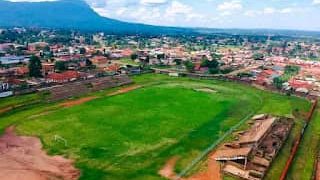







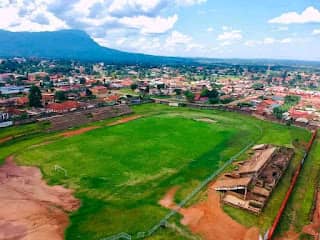
The proposed redevelopment of Mbale City Stadium has stalled after the National Council of Sports raised concerns about the size of the land on which the facility sits.
The ageing stadium, located in Mbale Industrial City Division in the eastern Ugandan city of Mbale, had been earmarked for redevelopment as part of government plans to construct modern sports facilities across the country.
However, the project is now in doubt after officials said the available land may not meet the minimum requirements for an international standard facility.
National Council of Sports secretary general Bernard Ogwal revealed the concern in late February while hosting officials from the African Union Sports Council, who were in Uganda to inspect the country’s sports infrastructure as part of assessments linked to Uganda’s bid to host the African Games 2030.
According to Ogwal, the government intends to develop modern stadiums in different regions to strengthen Uganda’s sports infrastructure and position the country as a future regional sports hub. Mbale City Stadium is among the facilities identified for redevelopment.
However, Ogwal said the land currently available at the stadium could fall short of the required size.
“We want to build stadiums similar to that of Hoima city stadium in different regions of the country. Kakyeka stadium in Mbarara has submitted all the requirements. However, Mbale stadium is sitting on 4 acres of land, which is not enough for a standard sports facility,” Ogwal said during a media briefing.
The government’s reference point is the new Hoima City Stadium, which sits on about 40 acres of land and is being developed to meet international standards.
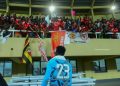
Mbale City Stadium manager Ali Madoi, popularly known as Guga, disputed the acreage figure and urged authorities to reconsider the redevelopment plans because of the venue’s historical importance.
“I appeal to the NCS to reconsider and construct our stadium because of its history. This stadium has given birth to so many great soccer players. I also want to clarify that the stadium is sitting on 6 acres of land, not 4 acres as the NCS boss stated,” Madoi said.
Despite its current dilapidated condition, Madoi described Mbale City Stadium as the most significant sports facility in eastern Uganda, stretching from Jinja to Moroto.
The stadium was built in 1982 during the administration of former Ugandan president Milton Obote.
Over the years it has produced several prominent football figures, including the late Paul Hasule, who began his career with Mbale Heroes at the venue, as well as Milton Karisa, Karim Watambala, James Alitho and coach Sam Ssimbwa.
Historically, Mbale City Stadium was also the last upcountry venue to host major international football matches, including editions of the CECAFA Senior Challenge Cup and a 2002 CAF Confederation Cup fixture between Mbale Heroes and Sudan’s Al-Merrikh SC.
Uganda has recently stepped up investment in sports infrastructure.
Construction is ongoing at Akii-Bua Memorial Stadium in Lira, while the renovation of Mandela National Stadium in Namboole is also underway.
The development of these facilities, alongside the new stadium in Hoima, is part of a broader strategy to strengthen youth sports development and support Uganda’s ambitions to host major continental events in the future.