







This Saturday, March 21, 2026, four of Uganda’s best rugby clubs will take on four of neighbour Kenya’s best rugby clubs in a cross-country straight knockouts tournament beginning at the quarterfinals stage.
Toyota Buffaloes and KCB KOBs will visit Menengai Oilers and Nondescripts across the border, while Platinum Credit Heathens and Stanbic Black Pirates will host Kabras Sugar and KCB Rugby in our backyard.
These matches, to be played at the ASK Nakuru Show Ground (Kenya) and at the Mutesa II Stadium Wankulukuku (Uganda), are under a championship which has been called the ‘Enterprise Cup’ in a first-of-its-kind for most players and fans alike.
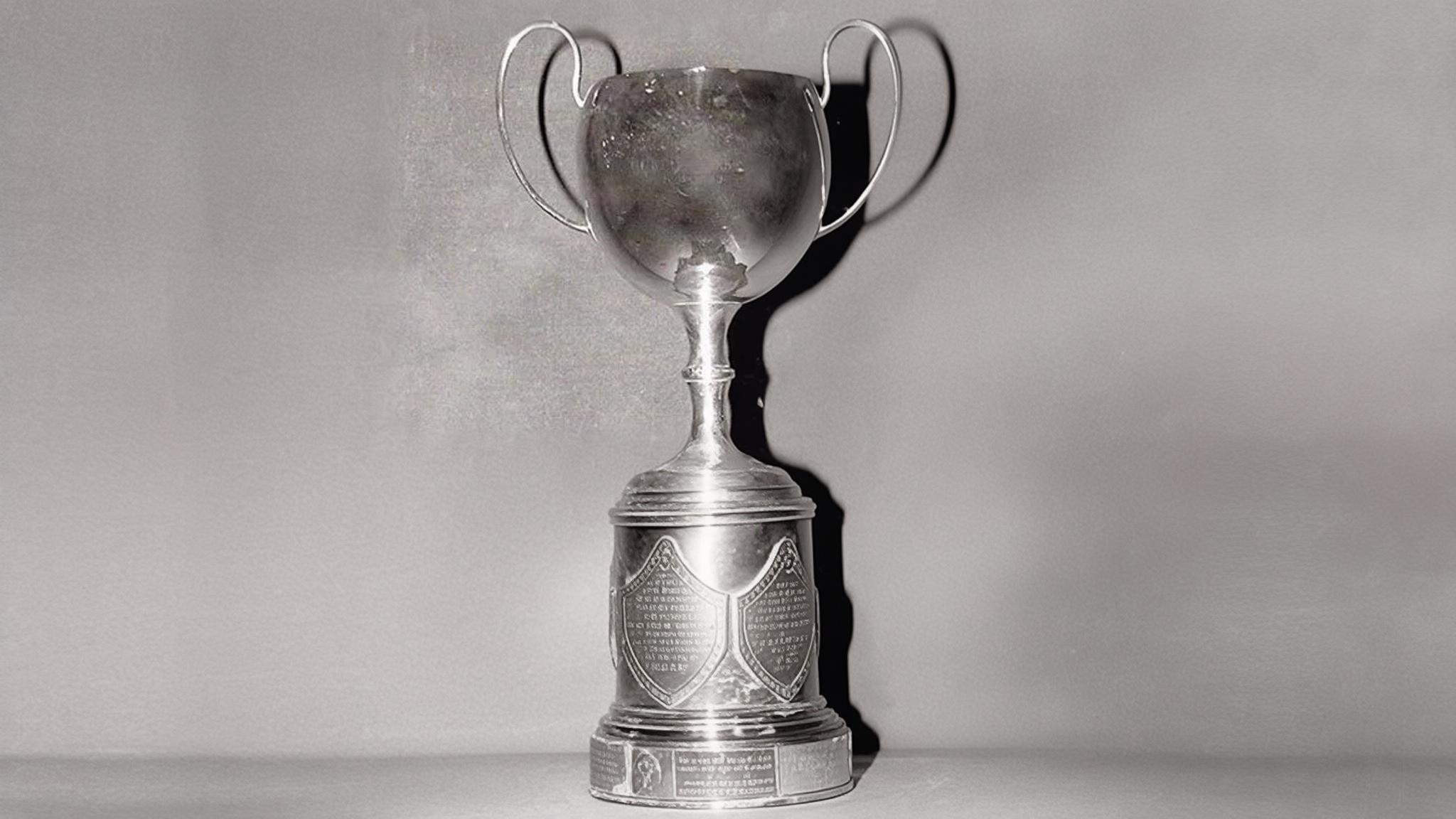
But the Enterprise Cup is not new to the rugby-mad East African region. In fact, this tournament has a rich ninety-six-year history and is the second-oldest rugby tournament on the continent after South Africa’s Currie Cup.
How the Enterprise Cup Started
In 1928, thirty crew members from the HMS Enterprise— one of the two Echo Class ships in the British Royal Navy— had a tour of East Africa and played ten rugby matches against Nakuru RFC, Kitale RFC, Mombasa Sports Club, combined Kericho-Londiani and Thika-Ruiru XVs sides of Kenya, Kampala RFC of Uganda, and franchises in Zanzibar, Dar es Salaam and Tanga of Tanzania. It was the first rugby tour of all three East African countries completed by a Royal Naval vessel.
Later that year, a parcel arrived at the Rugby Football Union of Kenya. The parcel contained a silver goblet which was a gift from the HMS Enterprise’s crew to be awarded as a cup to the winners of an annual championship.
The championship started in 1930 as an inter-district/territorial competition on request of the ship’s crew between four teams. It was won by Nairobi District (who beat Coast, Plateau and Rift Valley districts).
The championship format underwent multiple evolutions from 1933 to date, with clubs and franchises in East Africa taking part. It has been played every year since its inception, save for four periods: during World War II from 1940-46, in 1987, paving way for the All Africa (now known as African) Games in Nairobi, in 2010 as the Kenya Rugby Union restructured their calendar, and in 2020 due to the global COVID-19 pandemic.
List of Past Winners of the Enterprise Cup
Nondescripts RFC, Kenya’s oldest rugby club, is the most successful winner with twenty-five titles.
Only one Ugandan team, now-defunct Kampala RFC, has touched this historic silverware. They did so four times in 1956 and a three-peat from 1968-1970.
| Rank | Team Name | Number of Titles |
| 1 | Nondescripts | 25 |
| 2 | Impala Saracens | 11 |
| 3 | Kenya Harlequins | 10 |
| 4 | Nakuru | 7 |
| 5 | Eldoret | 6 |
| 6 | KCB Rugby | 6 |
| 7 | Kabras Sugar | 5 |
| 8 | Mwamba | 4 |
| 9 | Kampala RFC | 4 |
| 10 | Western Kenya | 2 |
| 11 | Homeboyz | 1 |
| 12 | Kenya Police | 1 |
| 13 | Kitale | 1 |
| 14 | Kenya Coast Province | 1 |
| 15 | Mombasa Sports Club | 1 |
| 16 | Nairobi District* | 1 |
| 17 | Nairobi North* | 1 |
Now ninety-six years old and eighty-seven editions later, the Enterprise Cup championship is still going strong.
Ugandan teams last participated in the Enterprise Cup in 1999, as the tournament became a majorly Kenyan reserve for a quarter century. This year 2026, it is back to the original cross-country East African format.
How the 2026 Edition Will Be Played
Sixteen Kenyan clubs entered this edition in December 2025 at the Round of 16 stage. The winners progressed to the in-country quarterfinals and, thereafter, the semifinals. Those are: KCB, Kabras, Menengai Oilers and Nondescripts.
Four Ugandan clubs will join them in March 2026 at the cross-country quarterfinal stage. They are: Pirates, Heathens, KOBs and Buffaloes, who were the semifinalists from Uganda’s most-recent XVs tournament— the Uganda Cup.
Although a seeding format was explained by the two unions on both sides of the Elgon Cup, it was not followed. But there is overwhelming willingness, especially from Kampala, for the tournament to happen and thus the fixtures have pitted the two countries’ strongest rugby clubs against each other.
Winners from the cross-country quarterfinals on March 21 will proceed to the cross-country semifinals on April 11 and the last two teams standing will face on in the final on May 30.
Why the Enterprise Cup is Good for Uganda and, frankly, Kenya
Uganda and Kenya used to be giants of African rugby, but they have been leapfrogged by a second Southern African country— Zimbabwe, who are headed to the 2027 Rugby World Cup in Australia and new North African countries— Algeria, Morocco (and soon Tunisia), who beat them in the most recent Rugby Africa Cup editions.
That said, the East African countries need to rethink their development pathways for their national teams.
History has proved that operating independently in silos does not benefit Uganda and Kenya since their Rugby Cranes and Simbas national teams do not play many international tests. This is mainly because of logistical and financial challenges.
Keeping in mind that the Rugby Cranes and Simbas have a majority of home-based players leaves a more affordable, sustainable and convenient option of engaging them through strong and competitive local rugby programs.
Thus, having over 180 players in 8 teams play against each other regularly will expose them to bigger challenges, grow the local base and ultimately, boost the national teams.
This is a reality which has been acknowledged by players and coaches from clubs which will take part in this year’s edition.
“The Enterprise Cup gives us an opportunity to face opposition from Kenya. Most of the time, we meet them only at the national team level, but now our clubs can test themselves against their teams,” Pirates captain Frank Kidega said to the Daily Monitor.
“We have struggled against Kenya and need to test ourselves at the club level because this is where the players come from for our national teams,” Buffaloes coach Charles Onen also said to the Daily Monitor.
In October last year, Kenya’s Menengai Oilers held a pre-season tour across the border, where they played against Pirates. Their management and players shared the same sentiments.
“An exciting one for us, we are deep into our pre-season preparing for the start of the season, and I could not have asked for a tougher opponent than the Pirates. On our end, I think we saw a few good things and some things that we need to improve and work on. But generally I am very happy with the progress so far,” Oilers’ head coach Gibson Weru said to the Fat Cats podcast.
The fruits from such cross-border engagements will not be reaped now or in the near future. But with patience and consistency, the long-term future looks as bright as the days when Uganda and Kenya dominated African rugby.
Main Sources credited: The Rugby Archive website, John Kagagi blogpost, The East African newspaper, Daily Monitor e-paper, The Daily Nation news site.