






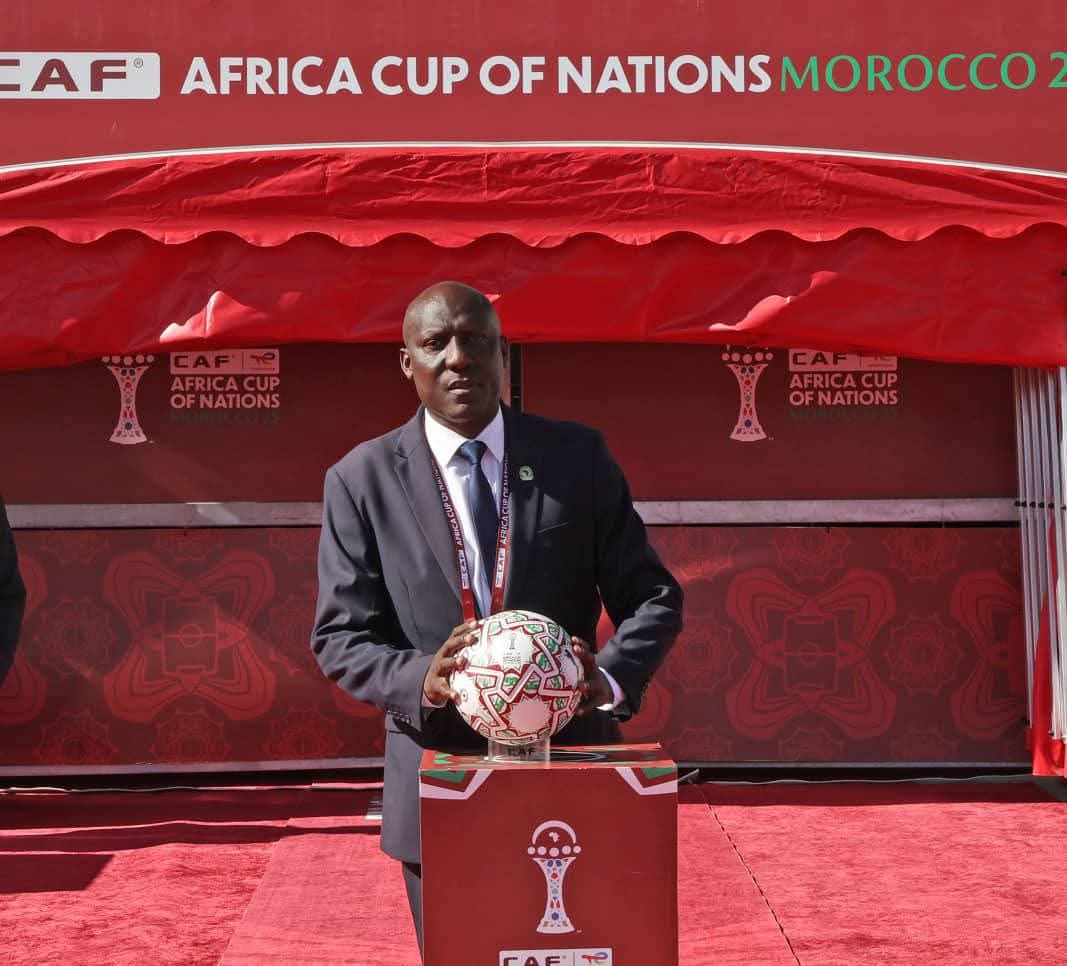
Security expert Dixon “Bond” Okello has urged the government to establish an independent advisory panel to oversee Uganda’s AFCON 2027 preparations, following a Confederation of African Football report that found none of the country’s proposed venues currently meet required standards.
The FIFA and CAF-certified safety and security specialist said the scale and technical demands of the tournament require a shift away from the current Local Organising Committee structure, which he argued lacks the expertise to manage such a project.
“The Govt should set up an independent high level Advisory panel of experts (pro bono) to offer strategic guidance and work closely with the LOC,” Okello posted. “LOC’s are usually bickering and lack the required expertise to manage such a huge project.”
He added that critical areas such as infrastructure development, safety, marketing, and information technology should be handled by specialists.
“CAF/FIFA stadium requirements/Infrastructural development, Safety and security, Marketing/sponsorship, and Information Technology require experts and not just anybody.”
Okello’s comments follow a CAF inspection report released after a February 2026 tour, which placed Uganda’s infrastructure in a “construction, upgrading, and corrective phase,” casting doubt on the country’s readiness as co-host of the “PAMOJA” bid with Kenya and Tanzania.
The report identified major compliance gaps across key venues.
At Mandela National Stadium, Namboole, inspectors recommended partial demolition of the West Stand and a complete roof replacement, warning that the current 15-month timeline is incompatible with the 2027 kickoff.
Hoima City Stadium, while structurally complete, was flagged for operational deficiencies, including non-compliant dressing rooms and obstructed spectator sightlines. Training facilities in Kampala and Hoima were also described as unevenly developed, lacking adequate lighting and medical infrastructure.
Okello said there was international precedent where independent oversight structures complemented organising committees to deliver major tournaments.
Qatar’s 2022 World Cup, London’s 2012 Olympics, and Germany’s 2006 World Cup are some examples of tournaments that had separate supervisory bodies providing strategic direction and helped meet strict timelines.
Uganda’s State Minister for Sport Peter Ogwang, has pledged to address the issues before CAF’s next inspection in August 2026, which is expected to determine whether the country remains a viable host.