






One of the unresolved issues in the sports sector is the absence of term limits. The recently concluded national elections saw many long-serving Members of Parliament fail to secure re-election.
There can only be two main reasons for such losses. The first is a prolonged stay in Parliament, and the second is failure to adequately address the needs of voters.
A time comes when people begin to question why a particular individual refuses to relinquish power. They ask whether that person is truly the only one capable of representing them in Parliament. They also question whether they are receiving the services and development they desire. These questions become inevitable, regardless of how good a leader may be.
More than 70 per cent of all National Federation constitutions in Uganda do not provide for term limits. Yet leaders of these federations can easily engage in practices that allow them to remain in top leadership indefinitely if they wish.
I served as President of Table Tennis from October 2014 until June 2025, and I understand exactly how these federations operate internally. Executive Boards can largely determine the electorate if they choose to do so.
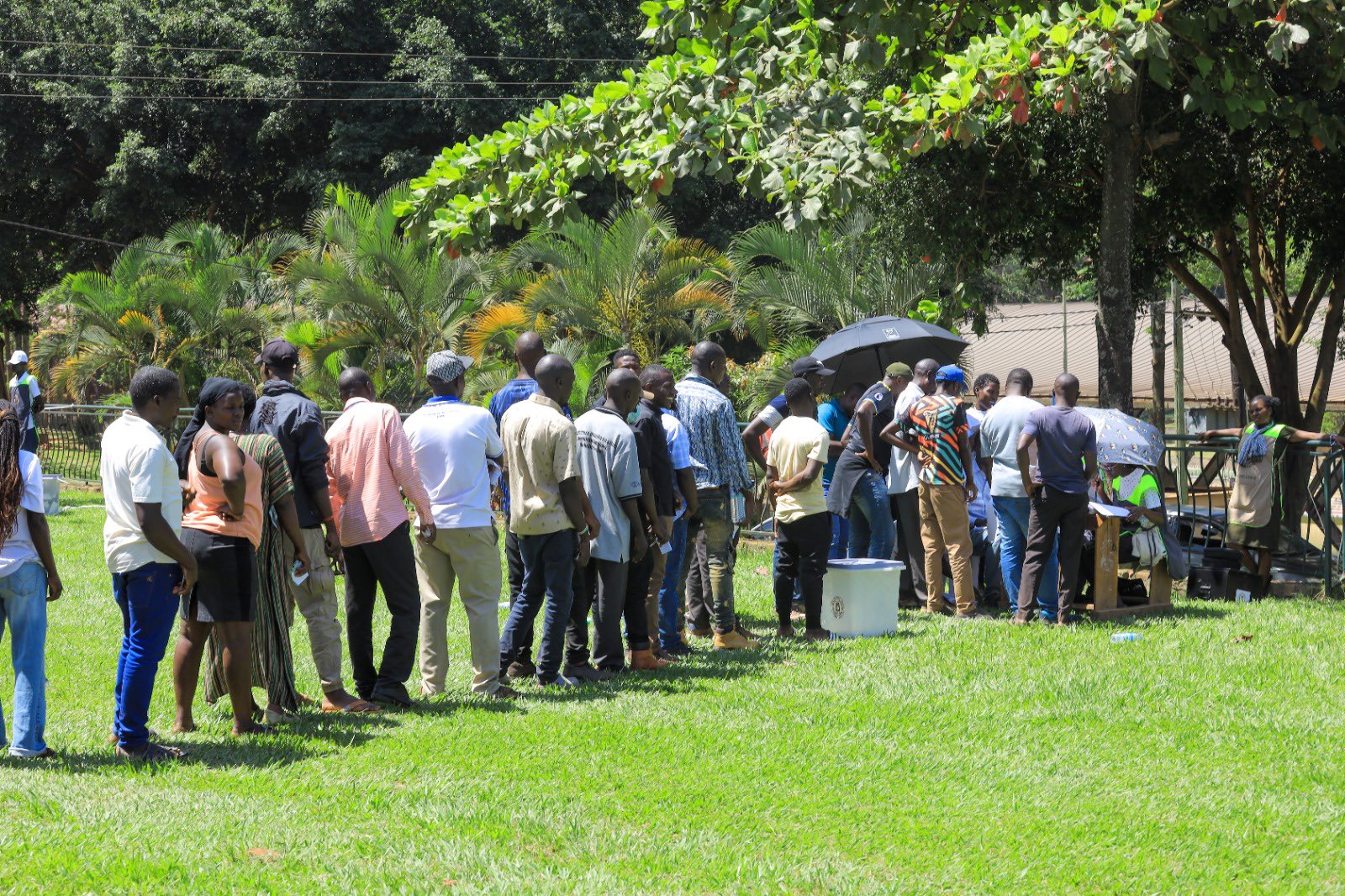
During the recent national elections, it was difficult for incumbent MPs to manipulate the electorate to remain in power, at least at polling stations where vote rigging did not occur.
The situation within National Federations (NFs) is very different. Either constitutionally or illegally, leaders can manipulate elections with relative ease. This can even be done cleverly within the statutes of a federation and during a gazetted General Assembly.
In 2019, I authored a book titled The Uganda Sports Development Masterpiece: Time to Go Commercial. In Chapter 6, I recommended that the National Council of Sports, working in conjunction with the Uganda Olympic Committee, develop a standard National Federation constitution template that all federations must adopt as a minimum requirement. I further advised that key governance elements, such as term limits, should be mandatory. Unfortunately, this opportunity was missed during the enactment of the Sports Act 2023.
It is critically important for term limits to be enforced in all National Federation constitutions. Leadership in these federations is voluntary, meaning leaders do not earn a monthly salary. There is therefore no justification for voluntary leaders refusing to retire under clearly defined term limits. Only selfish, greedy, and problematic leaders would seek to remain indefinitely in such positions.
Once leaders restrict the ability of the electorate to remove them from office, they often begin to pursue interests that are not beneficial to those they lead. This inevitably leads to the erosion of voter satisfaction. The heavy loss of incumbent MPs in the recent national elections resulted from their limited capacity to interfere with the voting power of the electorate.
This is not the case within National Federations, which explains why many leaders who have clearly overstayed in power continue to win elections repeatedly. This also contributes to the public perception that these federations operate like private entities that should not receive government funding. This perception complicates demands for increased public funding, because taxpayers rightly question why they should support organizations whose leadership treats them as personal property.
Best practice from successful international sports federations shows that Ugandan National Federations have no excuse for failing to adopt term limits.
For example, the International Olympic Committee, which earned 7.6 billion USD from the last Olympic Games, has term limits for its President. The President serves an initial term of eight years and may be re-elected for one additional four-year term, making a maximum of twelve years. If the President fails to secure re-election for the second term, they cannot contest again in the future.
The International Cricket Council, which operates an annual budget of approximately 3.8 billion USD, also enforces term limits. Its President may serve only two terms of three years each, for a maximum of six years, after which they are ineligible to run again.
Similarly, the Federation of International Football Associations, which earned 7.6 billion USD from the 2022 World Cup in Qatar, limits its President to a maximum of three four-year terms, totaling twelve years.
All three of these international sports bodies are commercially successful, with budgets running into billions of dollars.
Their success is partly attributable to leadership renewal enforced through term limits. The lesson from these examples, as well as from the recent national elections, is clear. National Federations must prioritize voter satisfaction and enforce limits on leadership tenure. Leaders should avoid waiting for forceful or embarrassing endings to their time in office.
The writer is a Bush Lawyer, former President of the Uganda Table Tennis Association, Secretary General of the Union of Uganda Sports Federations and Associations, and Board Member of the Uganda Olympic Committee.