






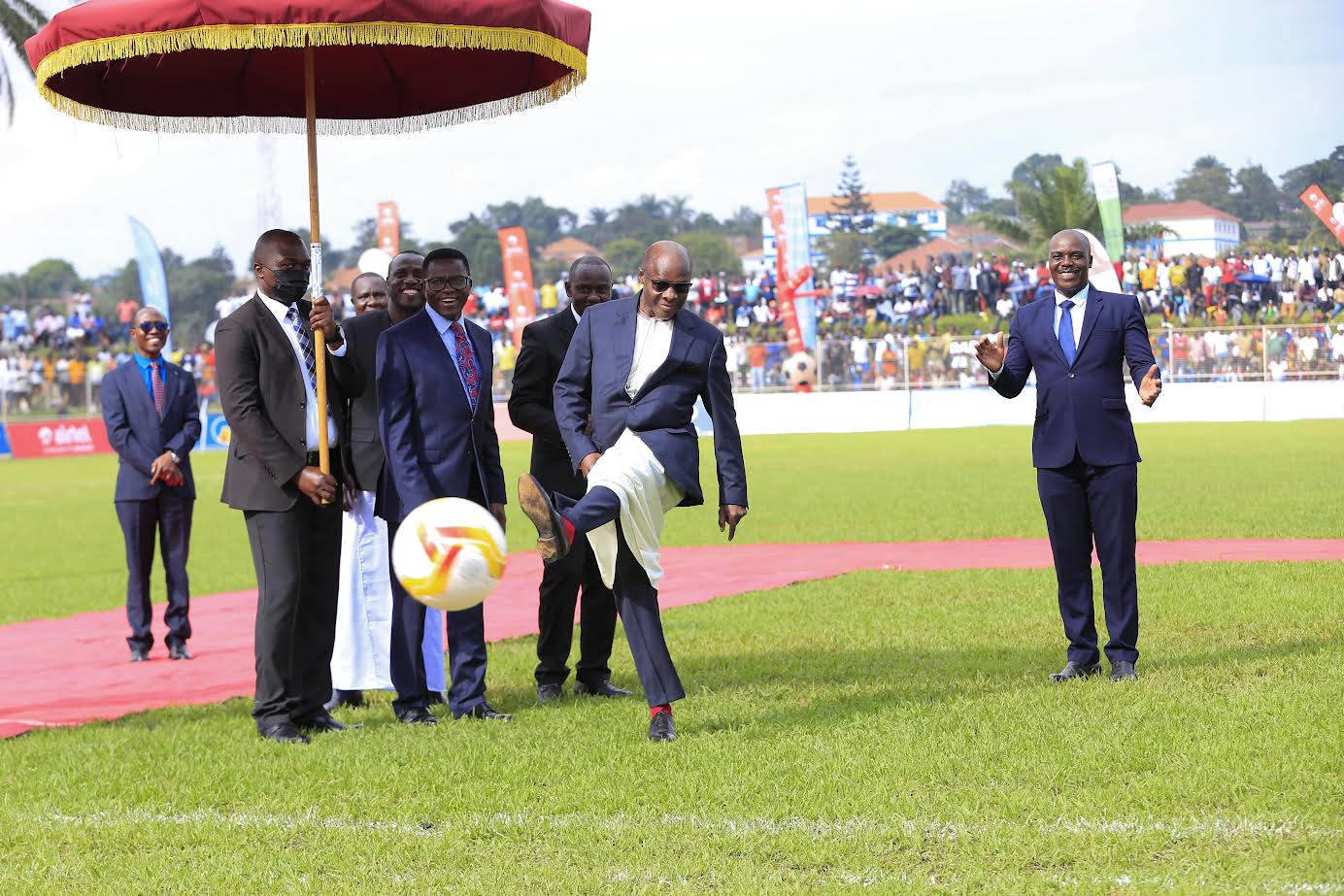
In 2014, the King of Buganda Kingdom, His Majesty Ronald Muwenda Mutebi, appointed a new Katikkiro, Charles Peter Mayiga. Around the same time, he abolished the old practice of appointing ministers on a voluntary basis.
With the kingdom having some financial capacity, he wanted the new cabinet under Mayiga to attend to kingdom affairs fully and on a full time basis. In the past, ministers served voluntarily and in many cases even deployed their own resources to execute kingdom duties.
The dedicated service offered by these ministers under the Katikkiro has seen work executed far more efficiently. As a result, the annual budget of the Buganda Kingdom has risen from about Uganda shillings 9.6 billion in 2014 to over 305 billion in 2026. Herein lies an important lesson for the Ugandan sports sector.
All federation leaders are volunteers with no monthly salary. Many of them believe they are simply helping to serve the sports sector through their leadership positions. And truth be told, many of them do use their personal money to help fund different sports activities in their federations.
The problem with voluntary service is that such leaders cannot easily be compelled to account and cannot be subjected to strict key performance indicators.
This creates a second problem and dilemma because the sports federations they supervise utilize taxpayers’ money, which demands accountability both in terms of financial expenditure and value for money. Government funding is always tied to performance indicators.
Due to the absence of salaries, some sports leaders have resorted to finding money to facilitate their activities in other ways such as borrowing, selling personal property, or using their employment salaries.
This situation can create leaders who begin to view a sports federation as personal property, or at least as an institution from which they must recover the money they invested by any means necessary. Some sports leaders also believe that as volunteers they cannot be compelled to provide timely information to those they lead or to the general public whose tax money they utilize.
The new Sports Act clearly stipulates that the executive board of federations must appoint a secretariat to run the day to day affairs of the federation. A secretariat is composed of dedicated employees with monthly salaries, key performance indicators, and performance targets. While this was a good addition to the new Sports Act, it requires proper funding allocations to these federations.
Uganda currently has about 25 federations that receive only about Uganda shillings 10 million per year in government funding. This amount cannot enable such federations to hire a competent secretariat while at the same time running sporting activities such as staging competitions, buying equipment, and supporting athletes.
For federations earning at least Uganda shillings 200 million and above, secretariats should ideally already be in place in line with the new Sports Act. Having volunteering elected or appointed leaders of the federation’s executive board performing secretariat duties is highly problematic for the sports sector.
If you want to see disaster in any organisation, give it reasonable funding and allow elected leaders to spend it without proper structures. Elected leaders often lack adequate knowledge in procurement, accounting, auditing, and administration. Their interests and aspirations are frequently driven more by politics than by professional management. Their voluntary status also creates a tendency to do things the way they want, when they want, and how they want.
The sports sector must learn from Buganda Kingdom and either abolish voluntarism among sports leaders or strictly enforce the appointment of salaried secretariat staff in all federations. These staff members should then be given clear performance indicators and targets. They must attend to the business of national sports development on a dedicated basis. Otherwise, the sector will either fail to develop or take far too long to do so.
The financial rewards of abolishing voluntarism are clearly visible when one looks at the Mengo journey. I have often criticized the excessive expenditure of limited funds on seminars and workshops where people simply sit, talk all day, eat, and go home. However, I would gladly support a seminar where Mengo’s top leadership is invited to explain how abolishing voluntarism improved the kingdom’s operations and financial standing.
In the past, I have also criticized why seminars and workshops rarely focus on marketing and income generation. A seminar involving Mengo’s leadership would help address this gap while also responding to the financial challenges facing our sports sector. It is remarkable how frequently we meet to discuss many issues except how to generate the money that funds those very workshops in the first place.
The writer is a bush lawyer, former president of the Uganda Table Tennis Association (UTTA), secretary general of the Union of Uganda Sports Federations and Associations (UUSFA), and an executive board member of the Uganda Olympic Committee (UOC).