






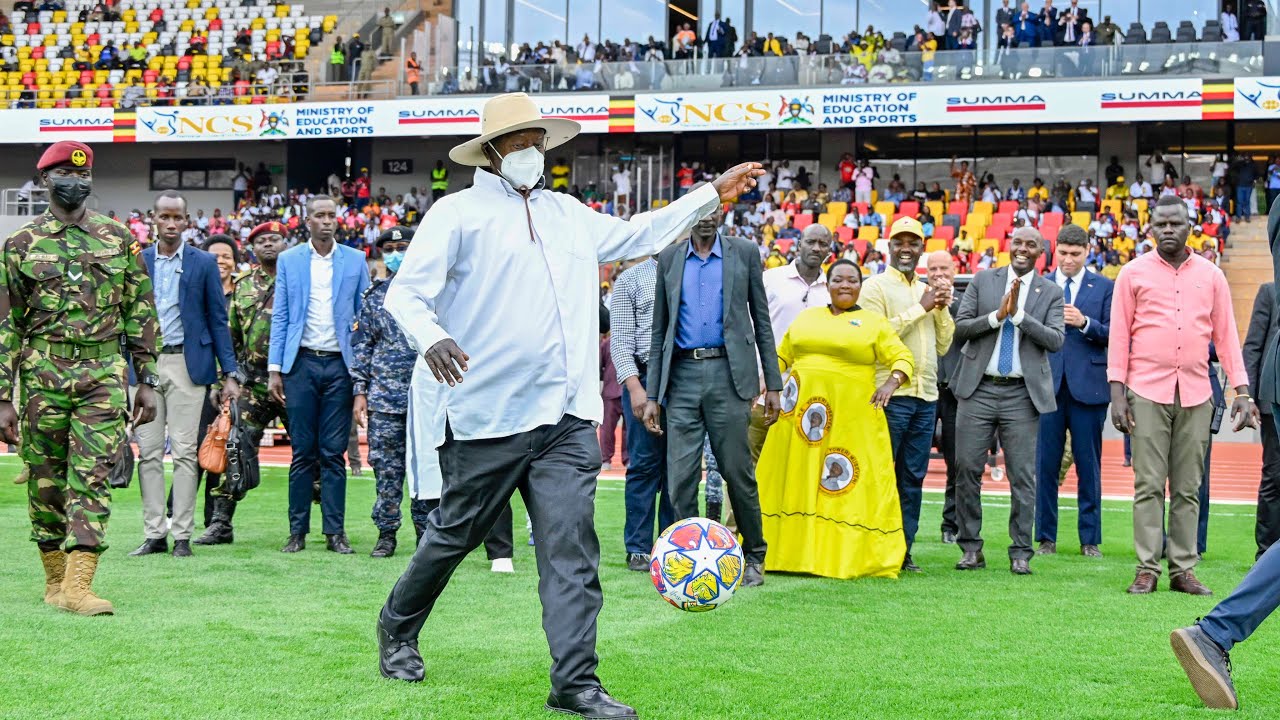
Uganda is betting big on football. With half a million visitors expected and billions of shillings already committed, AFCON 2027 is being sold as an economic game changer.
But how much of that promise is real, and how much is projection?
Key numbers
- 500,000 to 650,000 visitors projected
- At least $500 million expected in spending
- UShs 905 billion in additional government funding approved
What is Uganda betting on?
Uganda is preparing to co host the Africa Cup of Nations 2027 alongside Kenya and Tanzania in June and July 2027, with officials projecting between 500,000 and 650,000 visitors could enter the country during the tournament.
Government estimates suggest each visitor could spend at least $1,000, translating into a minimum $500 million injection into the local economy.
That projection underpins a wider national push, with UShs 905 billion in new public funding already approved to support preparations across infrastructure, tourism, and logistics.
Why does AFCON matter economically?
Major tournaments like AFCON are often framed as short term economic boosts driven by:
- Tourism spending on hotels, transport, and food
- Job creation in hospitality and services
- International visibility that can attract future investment
Previous editions offer some precedent:
- In Africa Cup of Nations 2021, host cities reported hotel occupancy rates exceeding 90 percent.
- During Africa Cup of Nations 2023, authorities pointed to increased activity in transport and hospitality sectors.
- Early estimates around Africa Cup of Nations 2025 suggested more than 600,000 visitors, reinforcing the tournament’s pull across the continent.
Uganda also gained experience by co hosting the African Nations Championship 2025, which officials describe as a critical rehearsal.
How realistic are the projections?
Officials remain confident the numbers are achievable.
“If each visitor spends at least USD 1,000 during their stay in Uganda, that could potentially be USD 500 million at a minimum spent in the local economy during the tournament,” said Dennis Mugimba, chairperson of the LOC Communications and Signage Sub Committee.
The government has adopted what it describes as a whole of country approach, encouraging private sector participation.
Banks and investors are already positioning themselves. A credit facility through the Uganda Development Bank is expected to support hotel upgrades in key host areas such as Hoima and Masindi.
At the same time, UShs 37.85 billion has been allocated to promote Uganda as a tourism destination ahead of the tournament.
What are the risks?
- Infrastructure delays: stadiums, airports, and hospitals must be completed by early 2027
- Overestimation of visitor numbers: not all projected fans may travel
- Post tournament underuse: facilities built for the event may struggle to generate long term returns
- Unlike CHAN, AFCON is larger in scale and places greater pressure on logistics, security, and service delivery.
What happens next?
The next few months will determine whether Uganda’s projections hold.
Critical projects include:
- Stadium upgrades and new construction
- Expansion of airport capacity
- Improvements in healthcare facilities
- Growth in hotel and accommodation capacity
Regional coordination could also play a role. A proposed joint visa arrangement between Uganda, Kenya, and Tanzania could simplify travel and increase visitor flows.
What will define success?
The economic impact of AFCON 2027 will depend less on projections and more on execution.
If infrastructure is completed on time and visitor experience meets expectations, the projected $500 million boost could materialize and extend beyond the tournament through tourism and investment.
If delays or inefficiencies emerge, the gap between expectation and reality could widen.
AFCON 2027 will bring football to Uganda on an unprecedented scale. But the lasting measure of success will not be the matches played, it will be whether the tournament delivers jobs, sustained tourism growth, and infrastructure that remains useful long after the final whistle.