





Football’s lawmakers, the International Football Association Board (IFAB), have moved decisively to toughen disciplinary measures, approving two far-reaching amendments to the Laws of the Game aimed at curbing misconduct linked to dissent and discrimination.
The proposals, tabled by FIFA, received unanimous support during a high-level meeting in Vancouver, Canada, underscoring a unified push within the sport’s leadership to reinforce respect, transparency, and accountability on the pitch.
These revisions are the culmination of months of FIFA-led consultations with stakeholders across the game and were initially ratified during IFAB’s Annual General Meeting earlier this year. Their introduction signals a clear shift toward stricter enforcement as global football heads toward the 2026 FIFA World Cup.
At the center of the changes is a controversial but targeted rule addressing players who conceal their speech during tense confrontations. The move is widely seen as an attempt to eliminate ambiguity in incidents involving alleged verbal abuse.
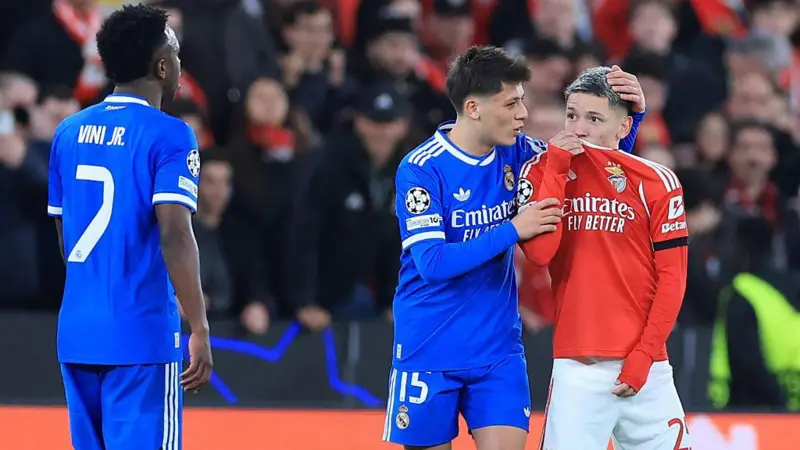
“At the discretion of the competition organiser, any player covering their mouth in a confrontational situation with an opponent may be sanctioned with a red card,” FIFA said in a statement.
The rule follows heightened scrutiny after a flashpoint involving Gianluca Prestianni and Vinicius Junior during a UEFA Champions League encounter between Benfica and Real Madrid, where accusations of racial abuse were complicated by obscured communication.
A second amendment takes aim at acts of protest that threaten the continuity of matches. Under the updated law, any player who walks off the field in defiance of an official decision now risks immediate dismissal. The sanctions extend further, capturing team officials who incite or support such actions.
This directive appears rooted in lessons drawn from dramatic scenes at the Africa Cup of Nations final, where the Senegal national football team, alongside head coach Pape Thiaw, briefly abandoned play in protest after a late penalty was awarded to the Morocco national football team. The spot-kick, taken by Brahim Diaz, was ultimately missed.
Despite Senegal initially emerging 1-0 winners after extra time, the aftermath proved explosive. The Confederation of African Football (CAF) later annulled the result and stripped them of the title, triggering widespread debate across the football world.
Reinforcing its stance on match integrity, IFAB emphasized that teams responsible for causing match abandonment will typically be deemed to have forfeited the game.
With these amendments set to be formally circulated to all 48 nations competing at the 2026 FIFA World Cup, the message is unmistakable: football’s authorities are tightening their grip on discipline, determined to eliminate gray areas and uphold the spirit of the game on its biggest stage.