






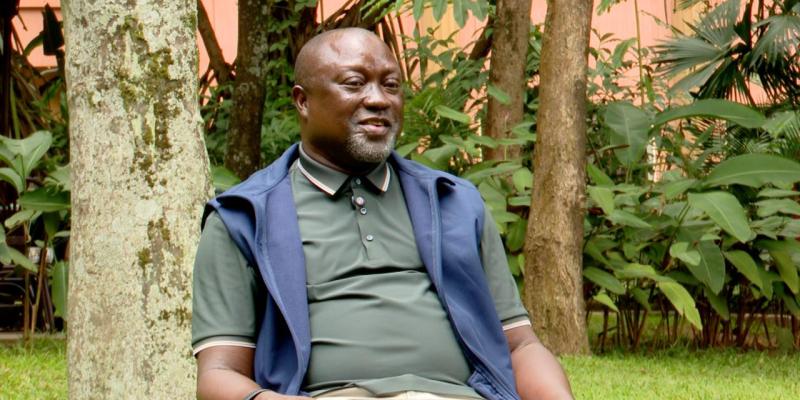
By Joseph Mbazzi Muguluma (MMJ Immanuel Ben Misagga)
I have been chasing this beautiful game since 2010. I have stood in stadiums where the air trembles, where strangers become brothers for 90 minutes, where a single goal makes you forget your name, your tribe and your passport.
I was in France during Euro 2016. French, Portuguese, Welsh and Ugandan supporters stood together under different flags but with one heartbeat. Nobody questioned my intentions at the gate. France understood what it means to host the world. The organisation was smooth, the fans were respected and, after the final whistle, I climbed the Eiffel Tower at night feeling as though the world belonged to all of us. That is how you welcome people.
I have also travelled through Germany. The welcome often arrived before the whistle. German precision, German order and German hospitality made football feel bigger than borders. I sat with supporters from dozens of countries and nobody asked where I came from. They asked one question: “Who is your team?” That is football.
Russia in 2018 was cold outside but warm inside. Moscow treated visitors like guests, not suspects. I shared meals and stories with Mexicans, Egyptians, Nigerians and Argentines. The metro ran through the night, volunteers smiled and the stadiums were full. Russia proved that a World Cup can be organised without making visitors feel like criminals.
South Africa in 2010. Brazil in 2014. Russia in 2018. Qatar in 2022. Different countries, different cultures, different languages, but one unwritten law remained: if your heart beats for football, the gates are open.
That was the world breathing together.
Now comes the 2026 World Cup in the United States, Canada and Mexico.
For me, it has become a football nightmare.
Canada rejected my visa application.
Why?
According to the explanation, I had too much money in my account and no family in Canada.
So now I am guilty of being financially stable and independent?
What kind of reasoning is that?
I have visited Canada before. I went to Quebec, Toronto and Ottawa. I respected the rules and left when I was supposed to leave. I did not overstay for a single day.
Today, approaching 60 years of age, with my farm, investments, reputation and responsibilities at home, who seriously believes I would abandon all that to remain behind and clean restrooms or shovel snow from frozen roads?
Never.
I have written it in my red book, one of the truths I intend to carry to God’s gate:
I was denied a visa when my hands were clean, my heart was clean and my only crime was loving football too much.
I was not carrying Ebola.
I was carrying hope.
I was carrying dollars saved over four years.
I was carrying the dream of a Ugandan who wanted to watch the world’s best footballers live before age finally slows his legs.
What pains me most is that I am not alone.
Across Africa, countless football supporters face barriers that seem impossible to overcome. Many feel judged by fears, stereotypes and assumptions rather than by their individual circumstances. They are evaluated through policies designed far away from the stadiums where football is supposed to bring humanity together.
When global security interests require African soldiers, Africa is remembered.
When peacekeeping missions need manpower, Africa is welcomed.
When dangerous assignments arise, Africans are often called upon to serve.
Yet when ordinary Africans want to sit in a stadium and celebrate a goal, many are treated with suspicion.
We are told it is about security.
We are told it is about disease.
We are told it is about migration.
But to many Africans, it feels like something deeper.
It feels as though we are welcomed when our labour is needed, but viewed differently when we simply wish to participate as guests.
That perception may be uncomfortable, but it exists.
Football should demand something better.
If genuine concerns exist, then create solutions. Screen people properly. Strengthen health checks. Improve monitoring where necessary. Work with FIFA to establish clear and fair procedures.
But do not punish entire populations because of assumptions.
Do not destroy dreams because of fear.
The World Cup is supposed to be football’s greatest celebration. Yet for many supporters, it increasingly feels like a party they are being asked to watch from outside the gate.
And where is the African Union in all this?
Too often, African voices seem absent when these concerns are raised, while millions of supporters remain spectators from a distance.
Football was created to break down barriers, not reinforce them.
It is one of the few places where a Ugandan farmer, a Brazilian child from a favela, a Japanese student and a Canadian truck driver can shout the same word at exactly the same moment:
GOAL!
That is the magic of the game.
If the World Cup cannot welcome the world, then it risks losing part of what makes it special. It becomes less a global celebration and more an exclusive gathering shaped by bureaucracy, restrictions and politics.
To the organisers, I say this:
You may deny visas.
You may stamp “REFUSED” on passports.
But you cannot deny one truth.
Africa is not a side character in football’s story.
Africa supplies players, supporters, colour, music, passion and emotion. Our voices help give the World Cup its atmosphere and its meaning.
You may have the stadiums.
You may have the television rights.
You may have the sponsorships.
But without the people, football is reduced to grass, concrete and noise.
And football has always been far more than that.