





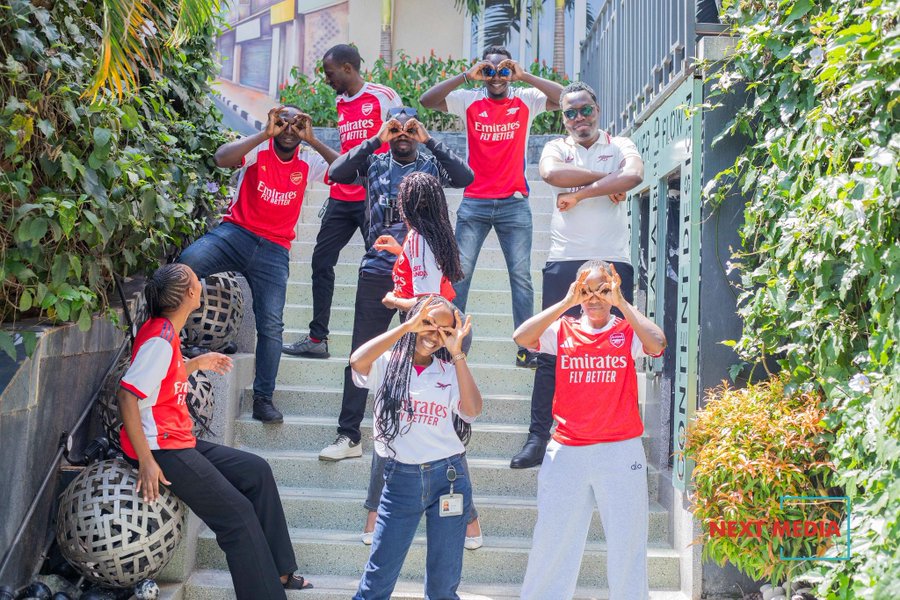
When Arsenal sealed the 2025/26 Premier League title after a 22-year wait, the celebrations that followed in Uganda looked less like support for a foreign club and more like a national holiday.
Streets in Kampala, Jinja and other cities filled with fans waving red-and-white flags, riding on boda bodas, singing club songs and pouring soda on each other in celebration. Police in some areas reportedly had to monitor impromptu processions as supporters celebrated deep into the night.
For many outside Africa, the scenes raised the same question again: how did a football club from North London build such an intense emotional connection thousands of kilometres away?
The answer lies in a mix of timing, television, identity, culture and loyalty that turned Arsenal into far more than just a football club for millions across Uganda and Africa.
Arsenal supporters in Uganda celebrate the club winning the premier league pic.twitter.com/PetKjJ2yio
— Doc (@karthikadhaigal) May 20, 2026
At the centre of the story is a generation that grew up during the transformation of African media in the late 1990s and early 2000s.
Across Uganda and much of the continent, governments liberalised broadcasting sectors and satellite television became more available. English Premier League matches suddenly reached local bars, trading centres, restaurants and “video halls”, where fans gathered to watch games communally.
Football became a shared social experience. In Uganda especially, Premier League matches quickly evolved into weekly rituals. Fans crowded around television screens in villages and towns, placing bets, arguing over teams and forming emotional attachments that often became lifelong loyalties.
The Premier League itself arrived at the perfect time. Compared to many domestic leagues struggling with funding and visibility, English football looked fast, dramatic and glamorous. Upsets were common, stars were global celebrities and every weekend carried emotional stakes. In Uganda, where football already occupied a central place in daily conversation, the league found fertile ground.
But while the Premier League exploded in popularity generally, Arsenal managed to create something deeper.
@Arsenal are something different. This is Mbarara District in Uganda. Celebrating on a round about 🤣🥰🏆. Come on you gunners pic.twitter.com/bXCaYmA0Zw
— The Arsenal Patriot (@PatrioticRasta) May 20, 2026
The biggest turning point came with the arrival of Arsène Wenger in 1996. Wenger transformed Arsenal from a traditionally rigid English side into one of Europe’s most entertaining teams. His football was fast, attacking and stylish. Young African viewers who were just beginning to consume the Premier League regularly saw a club that played with flair and freedom.
That identity mattered.
Arsenal became associated with beauty, creativity and confidence at a time when football fans across Africa were searching for teams that reflected ambition and excitement. Wenger’s Arsenal did not simply win. They won attractively.
The peak came during the famous 2003/04 “Invincibles” season when Arsenal went unbeaten in the league. For many Ugandan supporters now in their late 20s and 30s, that was the team that defined their childhood. Thierry Henry, Patrick Vieira, Dennis Bergkamp and Robert Pirès became household names in trading centres and school dormitories across East Africa.
Just as importantly, Arsenal looked familiar to African audiences because African players were central to the team’s success.
Fans of Arsenal in downtown Kampala are still celebrating the club’s trophy victory. pic.twitter.com/M7ZfHaLJJI
— Patro Uganda (@PatroUganda) May 20, 2026
Nwankwo Kanu became one of the club’s most beloved figures across the continent. His success created pride among African supporters who saw one of their own starring for one of Europe’s elite clubs. Later came players such as Kolo Touré, Emmanuel Adebayor, Alex Song and eventually Pierre-Emerick Aubameyang.
For many African fans, Arsenal felt welcoming in a way few European clubs did at the time. Wenger was widely admired for trusting African players and treating them as integral members of his team rather than outsiders. The club began to feel culturally connected to Africa.
That representation created emotional ownership. Arsenal was not viewed merely as a European club Africans watched. Many supporters felt the club represented them too.
Uganda became one of the clearest examples of that bond.
The country developed an unusually intense football culture around Premier League fandom.
Support became highly organised and deeply communal. Fan clubs emerged across Kampala and other towns, arranging screenings, tournaments and charity events. WhatsApp groups, betting communities and merchandise businesses grew around weekly matches.
Arsenal FC fans in Uganda turning the Premier League title win into a full street celebration 🔴 🇺🇬 🐐#Arsenal #PremierLeague #COYG pic.twitter.com/trpbPi6h28
— CIIA Sports (@CIIASportsINT) May 20, 2026
At the same time, rivalries became deeply emotional. Competition with supporters of Manchester United, Chelsea and Liverpool sometimes escalated beyond banter into violence, reflecting just how seriously football allegiances are taken. Over the years there have been reports of arrests, fights and even deaths linked to football disputes in Uganda.
To outsiders, that level of devotion can seem extreme. But within Uganda’s football culture, club loyalty is often tied to identity, friendship, masculinity, status and community. Supporting Arsenal is rarely just about results on the pitch. It becomes part of daily life.
That emotional investment was tested heavily after Arsenal’s last league title in 2004.
For more than two decades, Arsenal fans endured repeated disappointments while rivals collected trophies. Yet the support never disappeared. In many ways, the drought strengthened it. Fans developed a siege mentality, defending the club through years of mockery and frustration.
That long wait explains why the 2025/26 title celebrations became so explosive.
Ugandan Arsenal fans react to Atlético 1–1 draw! 🔴
Explore Uganda in style, make @kampalaserenahotel your home! Book online and get 20% off your stay – link in bio 🔗#AFTVUganda #ExploreUganda pic.twitter.com/hP9GUVwhVn
— AFTV (@AFTVMedia) April 29, 2026
For an entire generation of Ugandan supporters, this was the first time they had seen Arsenal crowned Premier League champions as adults. Many fans had inherited support from parents, older siblings or schoolmates during the Wenger years and stayed loyal through difficult periods.
The celebrations therefore became about vindication as much as victory.
Across Africa, Arsenal’s support remains strongest in countries like Uganda, Kenya, Tanzania, Nigeria and Ethiopia. Studies and social media analysis over the years have repeatedly shown Arsenal among the continent’s most-followed clubs, often competing closely with Chelsea and Manchester United.
Modern digital culture has reinforced that bond further. Fan channels like AFTV, player interactions on social media and commercial partnerships such as “Visit Rwanda” have kept Arsenal visible and culturally relevant across Africa. Younger supporters now engage with the club online daily rather than only through weekend broadcasts.
This is how Arsenal fans in Mbarara, Western Uganda, celebrated winning the Premier League trophy after 22 years. pic.twitter.com/yD7sWYJory
— Patro Uganda (@PatroUganda) May 20, 2026
What makes Arsenal unique in Uganda is not simply the number of supporters. It is the emotional depth of the connection.
In many places across the country, Arsenal support has become multi-generational. Parents who watched the Invincibles now raise children who support the same club. Entire communities gather around matches every weekend. Local businesses depend on football crowds. Matchdays shape social schedules.
By the time Arsenal lifted the Premier League trophy again in 2026, the club had already become woven into the cultural fabric of football life in Uganda.
That is why the celebrations looked so personal.