






A frequent concern in Uganda’s sports sector is the loss of highly talented and promising athletes as they grow older or take on the more demanding routines of life.
Nearly every sports discipline in Uganda has several names of once-promising athletes who simply disappeared and were never heard from again. One of the main reasons for this is the lack of enabling factors needed to help such athletes progress in their careers.
Key among these factors are proper equipment, training facilities, good coaching, regular opportunities to compete internationally, and the ability to sustain basic needs such as food at home, alongside fair prize money, allowances, or salaries. Because of these challenges, even parents often discourage their children from pursuing sports at a higher level.
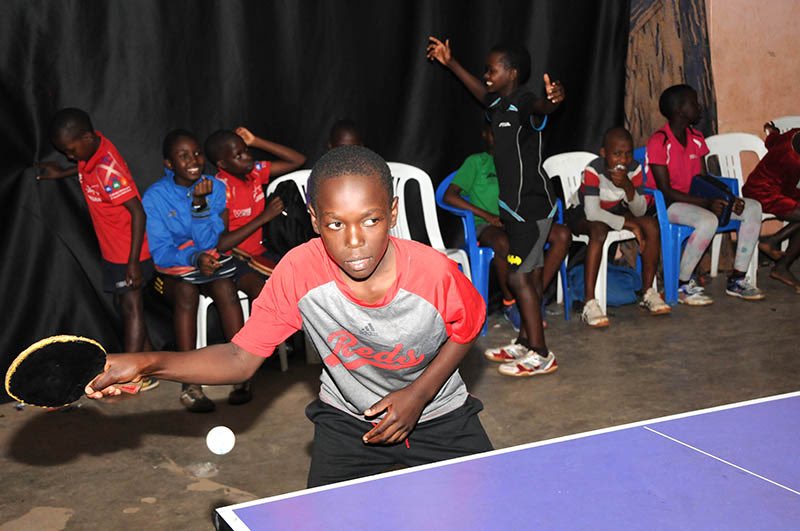
One of the youngest and most promising athletes in Uganda today is Joseph Sebatindira in table tennis. He held the world number one ranking in the under-11 category for nearly 18 months.
He only lost this position last December when he turned 11, as he was no longer eligible to compete in that age group under current international rules.
He now competes in the under-13 and higher age categories. In the under-13 rankings, he started at number six due to the points he had already accumulated. Notably, Joseph can compete strongly against players ranked above him.
For instance, he and the current world number three, Chirag Pradhan of the United States, both featured at the World Hopes Championship held in Sheffield, England, last October. Joseph emerged overall winner, while Chirag finished fourth.
In another example, Joseph faced the current world number one, Ladimir Mayorov of Spain, in an under-13 final in Germany last year, narrowly losing 3-2. Pushing the world’s top-ranked player to such a close result shows that Joseph has the ability to compete with the very best from more developed countries.
The gap in rankings is largely due to differences in accumulated points. For example, Chirag has 790 points compared to Joseph’s 547.
This gap exists because Joseph competes in fewer international tournaments, largely due to limited financial resources. If the Table Tennis Association were to fund his participation in all international calendar events, it would leave little or no funding for developing other players locally.
Beyond competition exposure, Joseph also requires high-level training in his current age category. This demands significant financial investment and presents a difficult choice for the country: whether to prioritise one exceptional talent or spread limited resources across many athletes.
Uganda cannot afford to keep losing talented athletes year after year. Investing in them can yield substantial returns. In table tennis, for example, many competitions now offer prize pools exceeding one million US dollars. Beyond prize money, Uganda could also attract foreign athletes and coaches to train alongside top players like Joseph, creating additional revenue streams.
This is a model already used by more developed countries, which leverage strong international performances to host training camps that attract paying participants from across the world. Uganda can do the same, provided it maintains athletes in top global rankings and invests in quality training facilities.
A relatively modest investment in a world-class athlete like Joseph, estimated at under 50,000 US dollars annually, could unlock significant opportunities. Reaching the semi-finals of a major tournament alone can earn around 40,000 US dollars. With more than four such competitions held each year, alongside several other events with considerable prize money, the potential returns are clear. Government support is therefore essential to help promising athletes remain competitive at the highest level.
Ultimately, government must establish a dedicated special fund to support top athletes and ensure they continue performing on the world stage. Losing such talent represents a significant waste of resources, especially considering the investment already made to bring them to elite levels. Allowing top athletes to drop off at their peak is equivalent to abandoning a valuable investment midway.
The writer is a bush lawyer, former President of the Uganda Table Tennis Association, Secretary General of the Union of Uganda Sports Federations and Associations, and a board member of the Uganda Olympic Committee.